

Weekend in Paris #11
Putting on the Ritz.

Weekend in Paris is a bonus series for paid subscribers—it’s one part recap of my off-duty fun as a baking school student, one part dishing about (temporary) expat life. This post is now unlocked for all readers to enjoy. Bienvenue!


As I’ve mentioned before, my friend Jenovia 🕸️ has spent considerable time in Paris and also happens to have exquisite taste. So whenever I’m in the mood for an over-the-top experience at the Venn-diagram intersection of “opulence” and “luxury,” I refer back to her list of recommendations.
One of those moments has been a long time coming, mostly because it’s fabulous (and exclusive) enough to have been booked out several months in advance, even though I arrived in the decidedly off-season month of February.
Jenovia had urged me to try the creations of François Perret, who’s at the very top of the international pastry game. You can buy his delicacies “over the counter” at the Ritz Paris Le Comptoir—named the world’s best pastry shop by La Liste in 2024—but I decided to sit down in the Ritz’s Salon Proust for the full experience of champagne, tea, and sweets.
I mean: when in Paris, right?


When I arrived at the appointed hour, the air was so heavy with refinement that I felt a prickle of anxiety…especially because I’d booked a table for one.
While I love being in my own company, I’d already discovered that I didn’t enjoy solo dinners in Paris, where the dining experience seemed to beg to be shared.
Fortunately, the understated warmth of the Ritz’s service felt reassuring. As I was ushered to my seat—perfectly stuffed and covered in red velvet, might I add—I received a drink menu, and was offered complete privacy (and a full glass of champagne) while I read every single considered word.
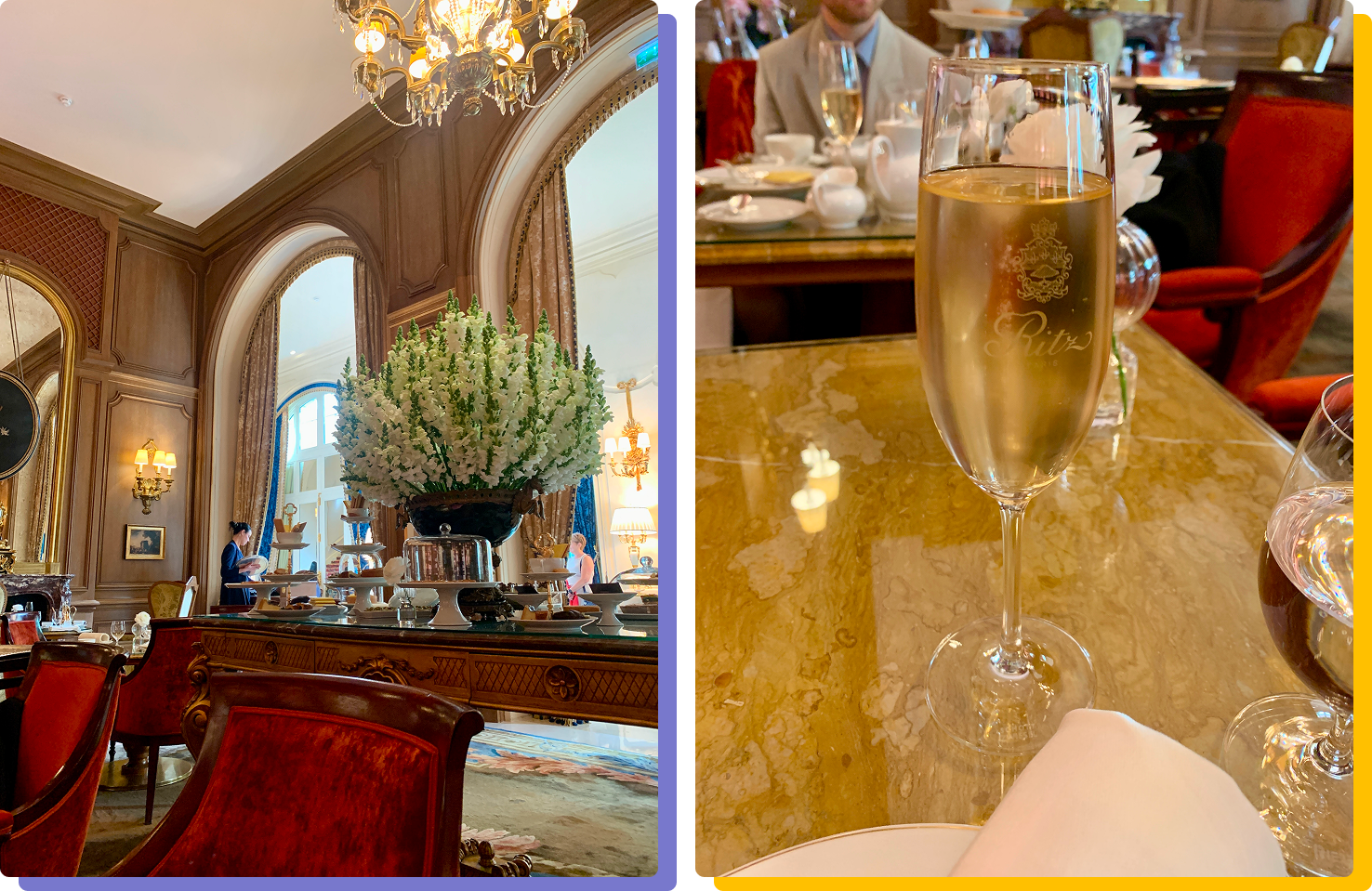
Afternoon tea at the Ritz comes with the aforementioned bubbly and a tiered platter of François Perret’s pastries. It also requires you to choose among dozens of types of coffee, tea, or chocolat chaud.
Selecting the beverage that would accompany me through my pastry journey was a big decision—especially because the first pastry (a twist on the baba au rhum) would be soaked in my beverage of choice.
I opted for ginger honey tea, and when the ceramic pot arrived (with a golden madeleine on top!), a tea-soaked baba with vanilla chantilly cream arrived too.
It wasn’t long before the rest of the pastries came, so many that I couldn’t keep track of the details my server was relaying.
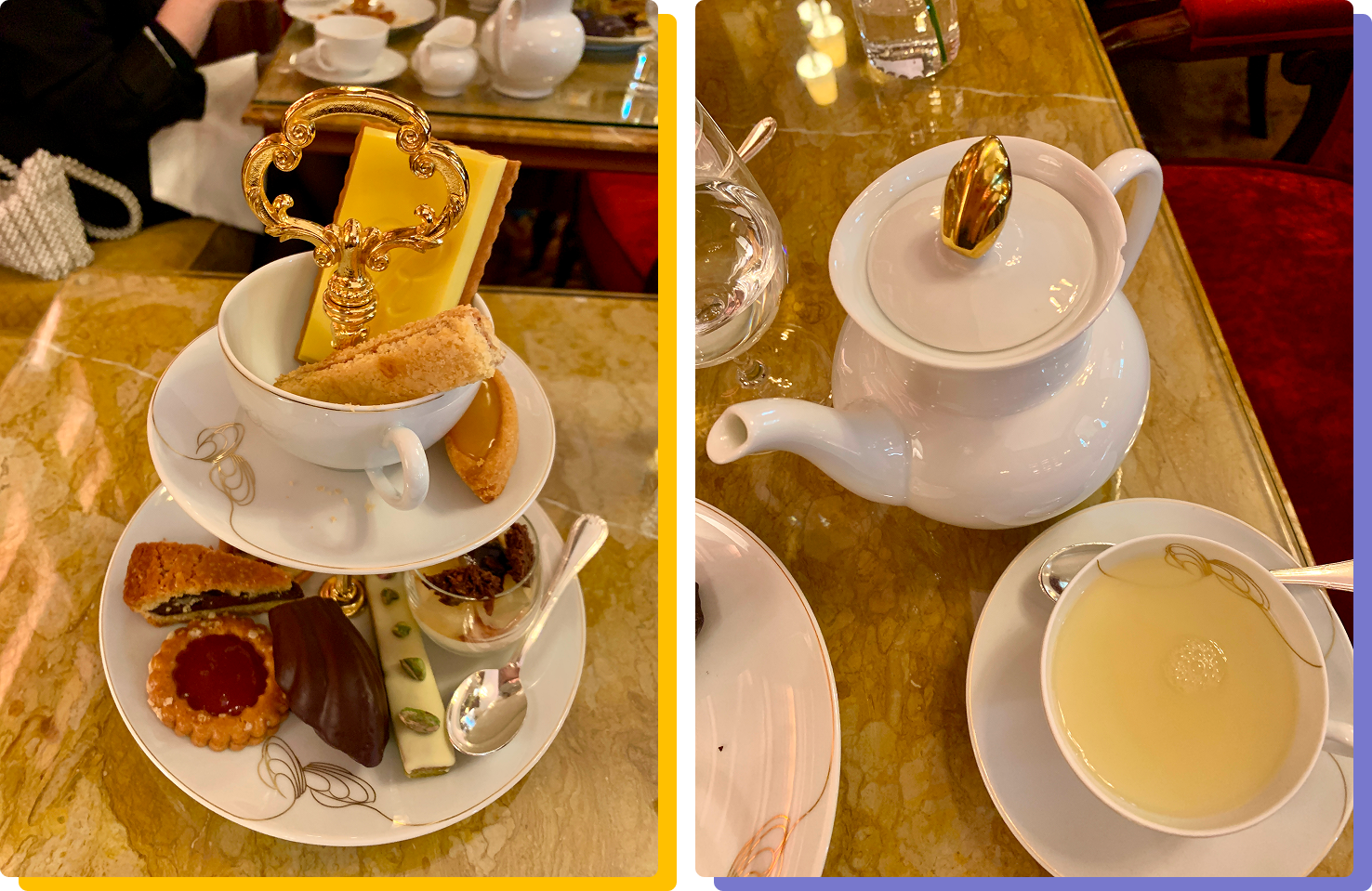
But I can tell you this: there was a chocolate-robed madeleine with ganache inside, and a tartlet topped with something bewitching—pear caramel? There was a pistachio financier that made me fall in love with financiers, plus Parisian flan. There was a “Ritz au Lait” biscuit and an exceptional tartlet with vanilla custard and pecans.
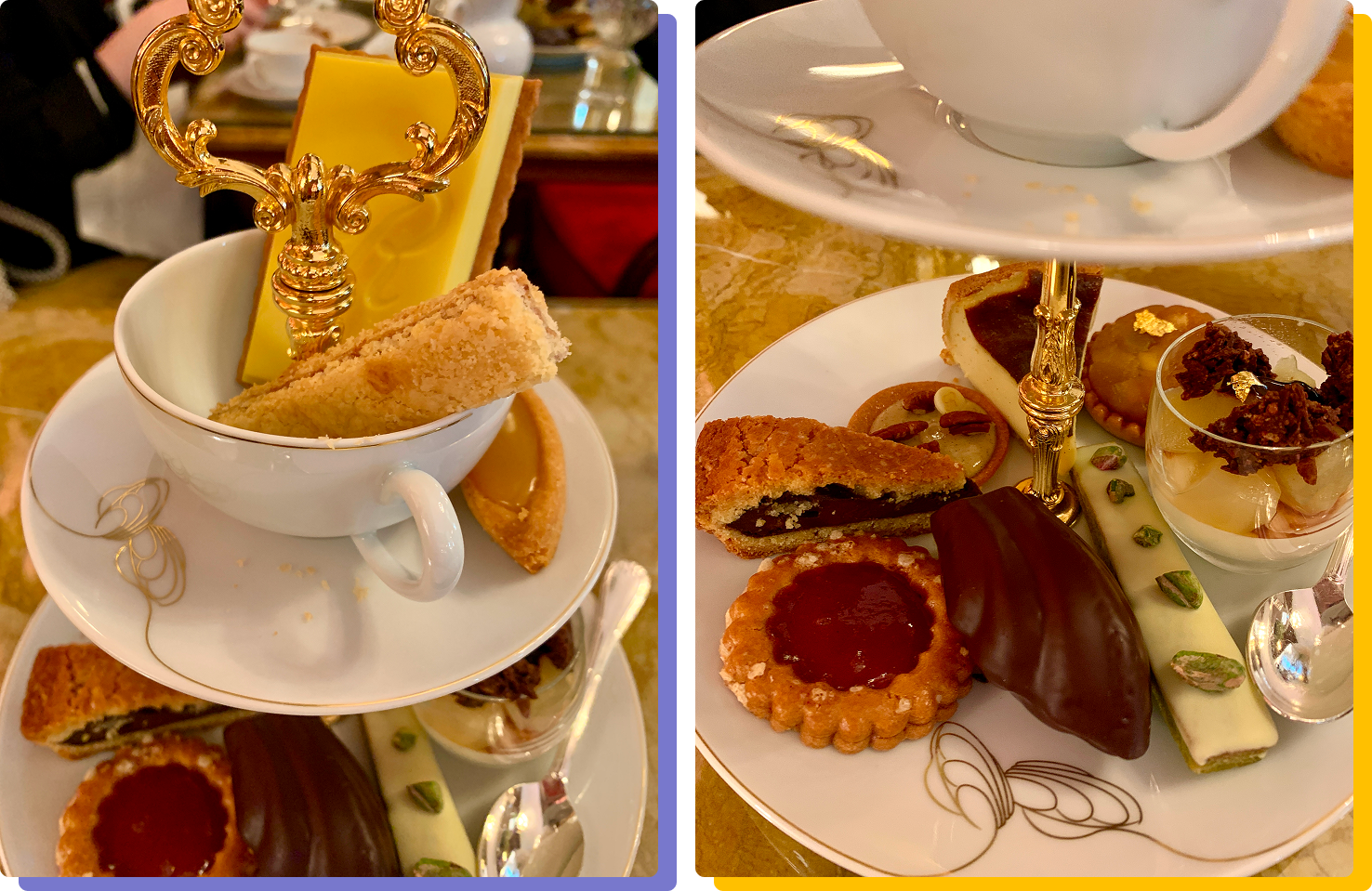
All the while, I was moving between tea, champagne, pastries, and passages from Ernest Hemingway’s A Moveable Feast. My dear friend Jolene Handy had literally plucked it off her own bookshelf for me before my trip, but I was only now cracking open the front cover.
And it turns out that the Ritz Paris—the hotel that’s also home to the exquisite Hemingway Bar—was the perfect place to do so.
First of all, a good book was the perfect company on this particular afternoon. The Salon Proust had few distractions from its pages: all I heard during my two hours were the hushed, reverent murmurs of other patrons, quiet jazz (complete with record scratches), and the occasional pop of a champagne cork. It was so quiet, I could almost hear the bubbles rising in my champagne glass.
And as I dug into the introduction to A Moveable Feast, written by Hemingway’s grandson Seán, I found the Ritz Paris referenced more than once. Seán opens with this historical anecdote and childhood memory:
In November 1956, the management of the Ritz Hotel in Paris convinced Ernest Hemingway to repossess two small steamer trunks that he had stored there in March 1928. The trunks contained forgotten remnants from his first years in Paris: pages of typed fiction, notebooks of material relating to The Sun Also Rises, books, newspaper clippings, and old clothes. To bring this precious cargo home to the Finca in Cuba on their transatlantic voyage aboard the Île-de-France, Ernest and his wife Mary purchased a large Louis Vuitton steamer trunk. I recall as a child seeing that trunk in my godmother Mary’s apartment in New York, and I can still remember its smart leather trim with brass fittings, pervasive Louis Vuitton logo, and the gold embossed initials, “EH.” The trunk itself was easily big enough for me to fit into, and it filled me with wonder at the grand, adventurous life my grandfather led.
When I finally paid my bill, my server asked how long I was in the city for, and the ensuing exchange led us to discover that we’d both spent time at Ferrandi.
He knew exactly where my boulangerie lab was located (“Just past the front gates on the right, yes?”) and asked if I planned to open a bakery in the United States.
“If you do, please come back and tell me where it is,” he requested with complete sincerity. “I’d love to visit.”
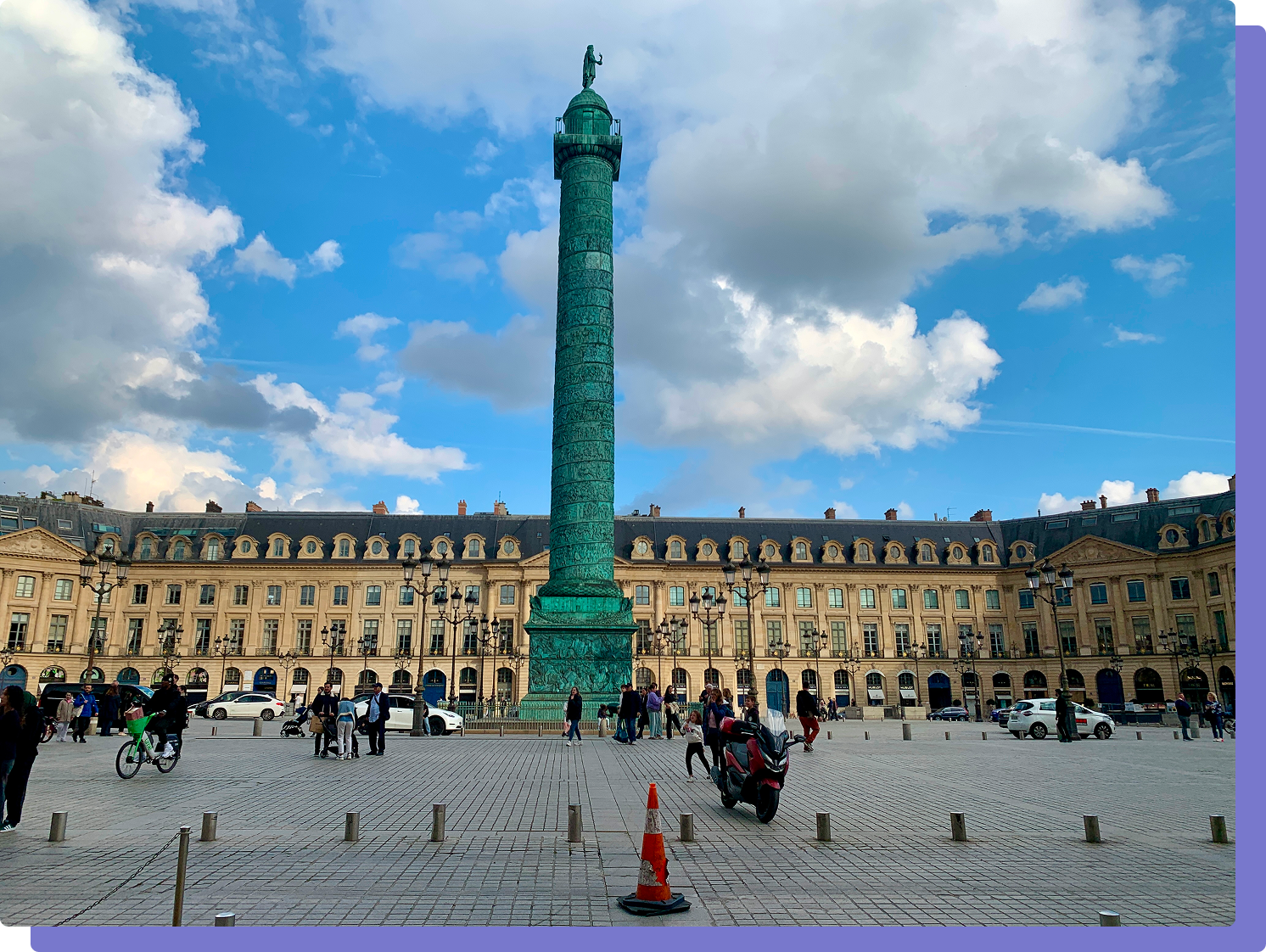
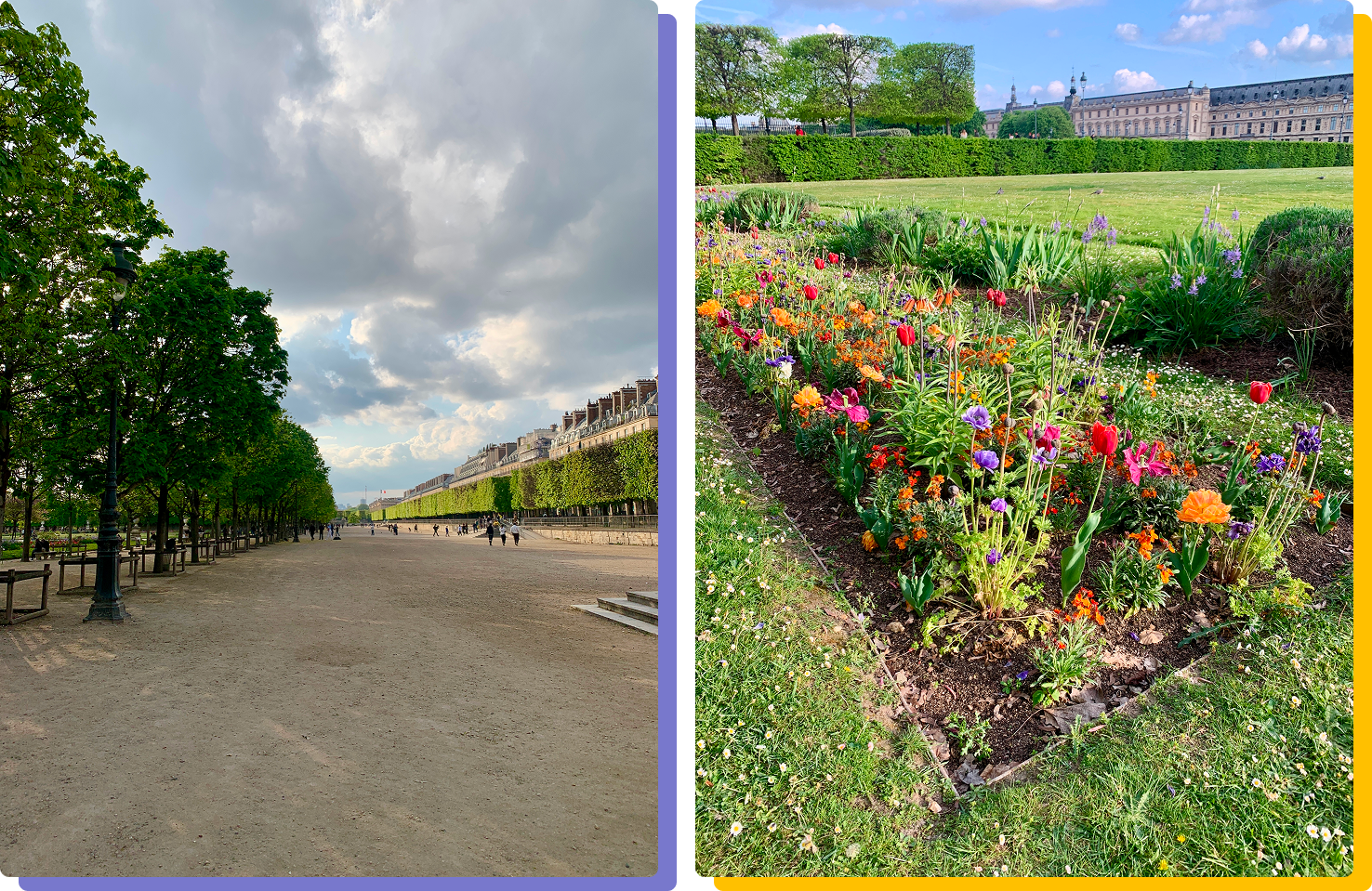
As I walked back home across the grand Place Vendôme and through the Tuileries, fueled by a gentle champagne buzz, I knew that something subtle but important had shifted that afternoon: I was fully under this city’s spell.
And with that, it’s back to the (fabulous) grind. I’ll be back with my final baking school recap soon!
Warmly,
Maddie
Breakfast Club is a newsletter about pastries with a side of personal growth, from an ex-financial planner turned baker. If you savored this edition, click the ❤️ (or share with a friend!) to help new readers discover it—and subscribe to get each letter fresh from the oven.
Well...are you? xo
Yay! I'm so glad you went! It looked exquisite 😍 There is so much history there, and I love feeling the magic in those walls accompanied by so much visual splendor ✨